• Search
  • Login or Sign Up

ELECTRODE

2011
4 min
Directed by Barbara Droth

When the musique concrete pioneer John Cage first experienced the effects of an anechoic chamber at Harvard University in 1951, he heard just one thing; his heartbeat and the blood flowing through his body. Met with true ‘silence’ he left the chamber enlightened, realising that finding true silence is impossible.

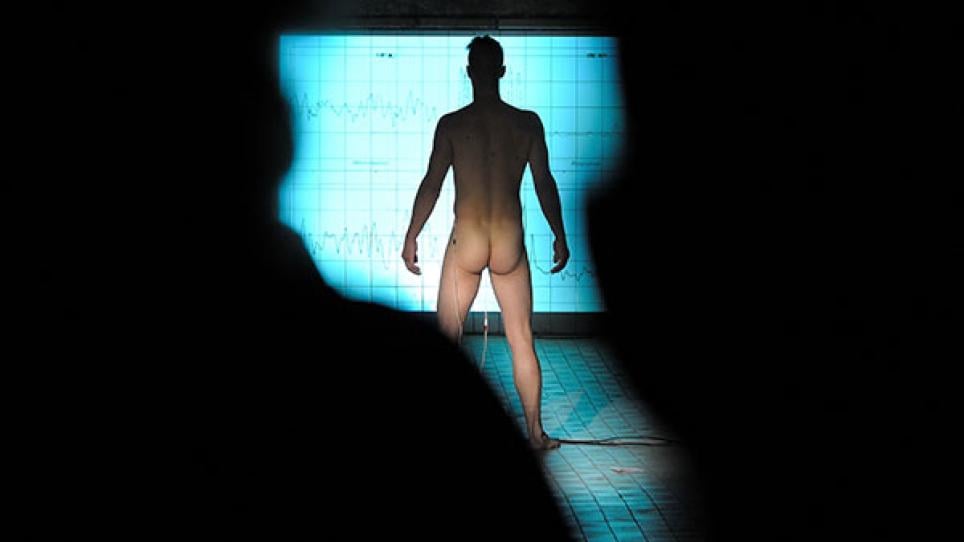
Cage went on to transform this ‘silent’ experience into ‘4’33” , but the performance-artist Dani Ploeger adopted a different approach to making his insides audible in 2011’s with ELECTRODE. Inserting a sensor-connected electrode into his anus, Ploeger tightened and relaxed his sphincter muscles to match the contraction data of a male orgasm. The sound which emanated from Ploeger’s anal cavity gurgles with heavily distorted drone and subterranean frequencies.

  • Jack Needham

title
x
title

Electronic Body Music

Flyer for event ELECTRODE.

ELECTRODE

Inserting an electrode into his anus, the artist tightens and relaxes his sphincter muscles to match the contraction data of a male orgasm.
Flyer for event Joseph Malloch: Spine.

Joseph Malloch: Spine

Instruments by their very definition are rigid. They evolve, sound crisper, louder and come with an additional filter for an extra £1000 every 6 months, but their capabilities ordinarily remain restricted to boxes, sticks and metal tubes, albeit ones with countless possibilities. Devised in 2011, Joseph Malloch set about taking the instrument outside of its self-imposed restraints with the Spine, Rib and Visor, prosthetic digital instruments designed to be played by dancers that are simultaneously a thing of beauty and a vision of macabrist evolution. Tracking the instrument’s movements in real time the additional vertebrae and cloaking ribs control a granular synthesiser as it twists and bends. Jack Needham
Flyer for event Alvin Lucier: Music For Solo Performer.

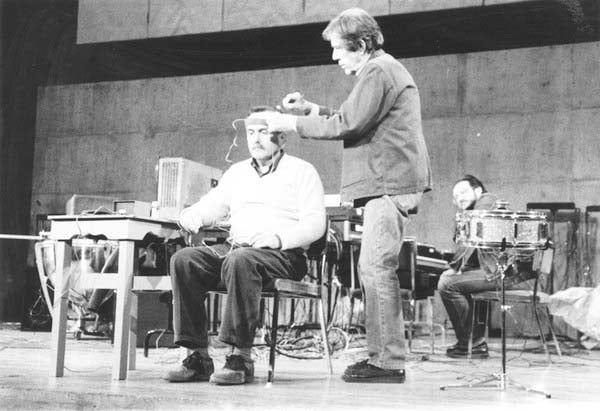
Alvin Lucier: Music For Solo Performer

Long before IDM became electronic music for the mind, defined by Aphex Twin and the sound of bald men high fiving themselves, Alvin Lucier exploring how brain waves could compose machine-driven orchestras. To make Lucier’s brain waves audible two electrodes were first placed on each side of his head. The signals generated from these electrodes were then fed to an amplifier, through a mixing desk and finally activating a selection of snare drums and cymbals that were connected to loudspeakers. The performance came to be Lucier’s masterpiece, the first of its kind at the time and a reminder that to look to the future, sometimes we must consult the past. Jack Needham
Flyer for event Queen Mary University of London: ‘Human Harp’.

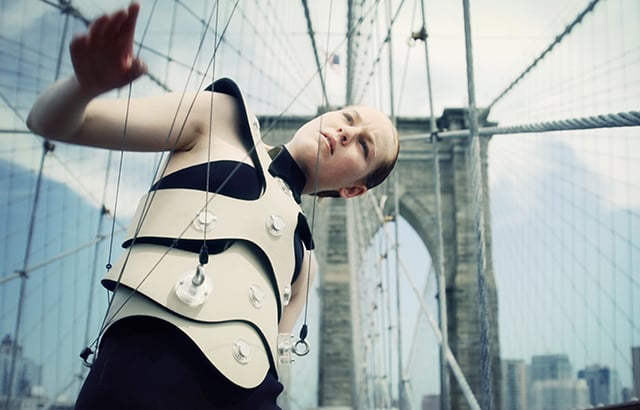
Queen Mary University of London: ‘Human Harp’

‘If these walls could talk’ isn’t always just a turn of phrase. Sometimes, they do. The Tvísöngur Sound Sculpture in Seyðisfjörður, Iceland, is formed of five dome-like concrete structures and was built to sing in a five-part harmony, amplifying the mountainside landscape where it sits. Closer to home, throughout the characteristically harsh windy months Manchester’s 47-story tall Beetham Tower whistles at high frequencies across the city. The ‘Human Harp’, built by a team at Queen Mary University of London, takes this idea and runs with it. Inspired by suspension bridge architecture, cables are drawn from the bridge structure and are then attached to a chest plate-like device worn by the user. The twanging of the strings are then measured by digital sensors to form sonic textures from the structure’s natural vibrations. This enables participants to, in essence, play the bridge. Jack Needham
Flyer for event Kathy Hinde: ‘Phase Transition’.

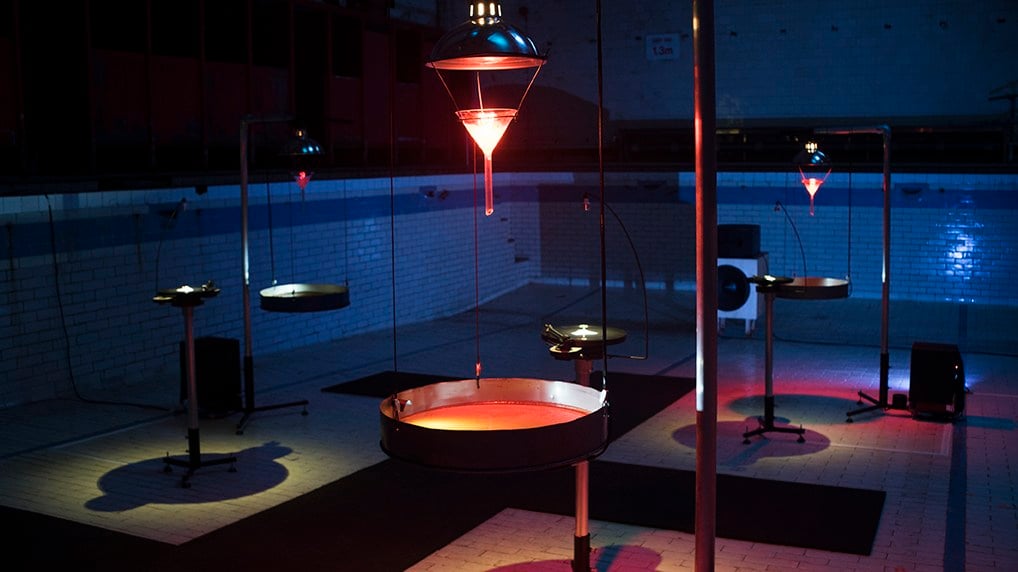
Kathy Hinde: ‘Phase Transition’

Our strive toward technological advancement is quickening our demise. It’s a futile irony, destroying our present to make way for the future, and it paints something of a bleak landscape. But, with ‘Phase Transition’, at least it sounds good. Kathy Hinde’s ‘Phase Transition’ turns global warming data into noise in real time. Every time you choose plastic over paper or decide to skip the recycling Hinde’s installation melts at a rate determined by climate change data. The water droplets falling into metal containers below that resonate across the room, almost like a ticking clock. The performance is cut to vinyl over the course of performance, composing an all too real orchestral score to our own extinction, one where we are all performers. Jack Needham
Flyer for event Neil Harbisson: Cyborg.

Neil Harbisson: Cyborg

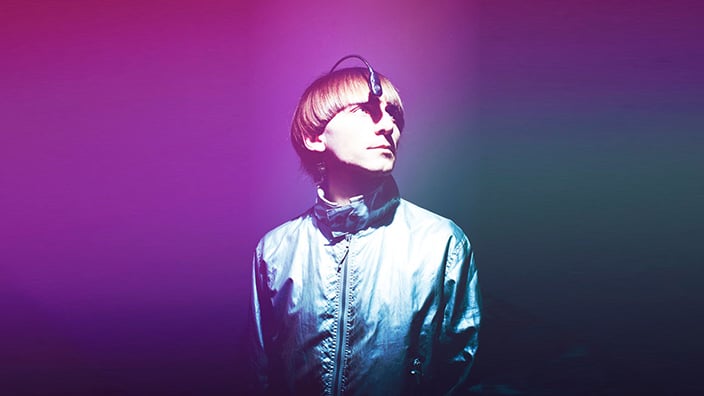
If you lose one sense the others only get stronger, but through a greater access to body modification tools and a popularising of formerly niche bio-hacking communities, we can take that a step further. Neil Harbisson is colour blind, at least in the traditional manner as he senses colour through an antenna reaching from the back of his skull to the centre of his forehead. This makes his a walking cyborg, The antenna converts hue into frequency, thus his world of colour is translated into music. Full English breakfasts are an F or G sharp, Nicole Kidman’s facial frequencies are similar to that of Prince Charles and turquoise, purple and orange, his preferred funeral attire, is a C Major. Plus, it’s WiFi enabled, because we already live in the future. Jack Needham
Flyer for event Marco Donnarumma: Corpus Nil.

Marco Donnarumma: Corpus Nil

Marco Donnarumma is an Italian performance artist and scholar who exists on the fringes of experimental noise. ‘Music for Flesh II’, a previous work, uses muscle spasms to make music, and as Donnarumma writhes and contorts his body his motions build ambient soundscapes that are equal parts euphoric and unsettling. This became a framework of sorts for his 2016 piece Corpus Nil. Biophysical sensors are attached to a person’s body that feed body voltage to a machine, setting of various light and sound signals that morph over time. Both the performer and the artificially intelligent machine are independent but speak to one another through a constant feedback loop of noise that builds as muscle tension and skin friction trigger sensors. This creates an entity that is part human and part machine. Jack Needham
Flyer for event Michel Waisvisz: The Hands.

Michel Waisvisz: The Hands

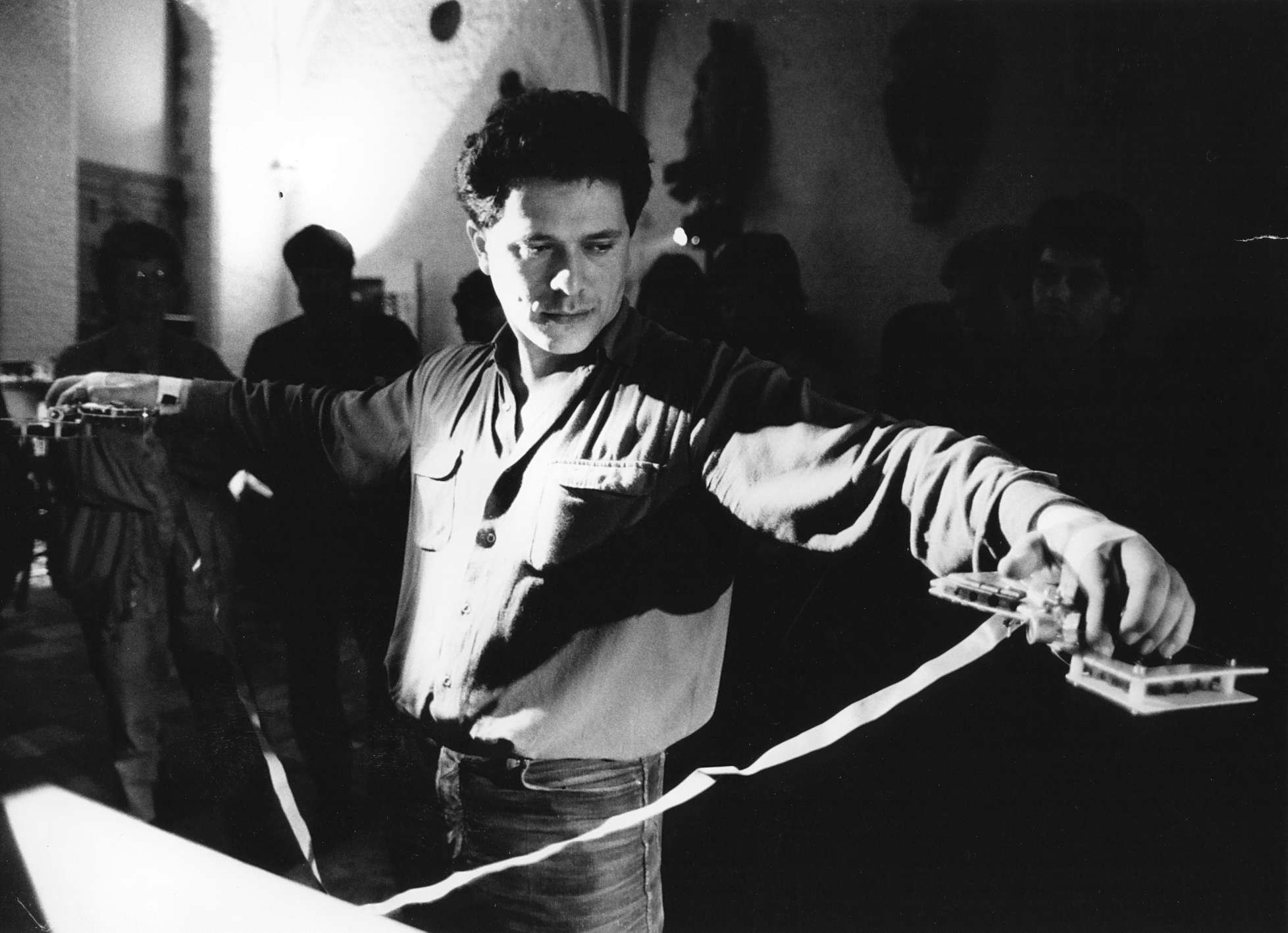
The Dutch musician and sound artist Michel Waiswisz is an underrated electronic music pioneer, experimenting with absurdist instruments from the 1970s when he invented the Kraakdoos (Cracklebox) alongside his collaborator Geert Hamelberg. Devised around the concept of the human body becoming an integral part of a musical instrument, the Kraakdoos is a small electronic device that generates noise only when it comes into contact with human body part, connects the circuitry and flow of power. This became the starting point for The Hands, a device first showcased June 1984 at the Amsterdam Concertgebouw that gave Waiswisz gave himself two extra, interactive limbs. The hands were a remote control for three Yamaha DX7 synthesisers, allowing the wearer to “touch sound” as Waiswisz wrote in 2006. Jack Needham
Flyer for event For The Time Being.

For The Time Being

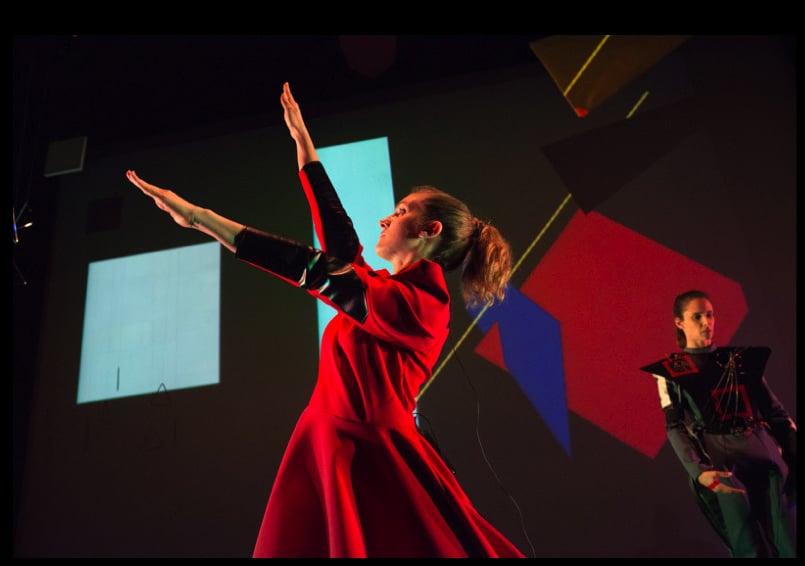
The London-based dance company Sadler’s Wells are renowned for abstract performances that question societal norms. 2014’s ‘for the time being’ is no different. Conceived by the choreographer and artistic director Johannes Birringer, ‘for the time being’ is inspired by the Russian opera ‘Victory Over the Sun’, a futurist story of technological revolution. ‘for the time being’ tells this story through the sound of movement. Each dancer is fitted with a garment (not unlike what the Beastie Boys wear in ‘Intergalactic’) that’s fitted with a series of gestural controllers. This allows the performers to amplify and distort the accompanying score in real time through their movements, creating an unsettling backdrop to a vision of dystopian future. Jack Needham
Flyer for event Galvanic Vestibular Stimulation.

Galvanic Vestibular Stimulation

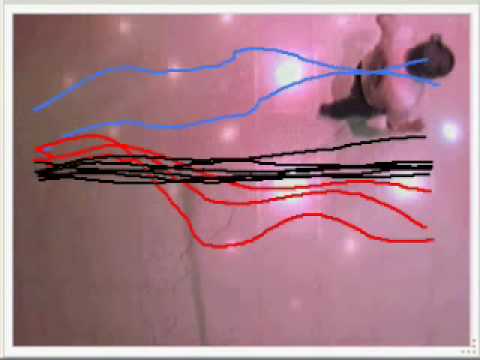
As any struggling DJ can attest to, encouraging a room full of people to dance can be tough, but through the use of Galvanic Vestibular Stimulation, it can become a lot easier. The tech works by sending electrodes to a pair of headphones that stimulates the part of the ear that controls balance, allowing you to control a person’s movements. This transforms humans into remote controlled beings; you can send them through mazes, make them play football or send them off a cliff if you were so well inclined. It also means you can make them dance. Or, at least, shuffle side to side like zombies to the music, which isn’t a million miles away from what you see on UK dancefloors every weekend anyway. Jack Needham
x
title
x
title
x
title
x

title
x
title
x
title
x
title
x
title
x

title
x
title
x
title
x
title
x
title
x

title
x
title
x
title
x
title
x
title
x
x
title
x
title
x
title
x

title
x
title
x
title
x
title
x
title
x

title
x
title
x
title
x
title
x
title
x

title
x
title
x
title
x
title
x
title
x

title
x
title
x
title
x
title
x
title
x

title
x
title
x
title
x
title
x
title
x

title
x
title
x
title
x
title
x
title
x

title
x
title
x
title
x
title
x
title
x

Subscribe to our newsletter for updates on film screenings and residencies.

You can opt out anytime. We will treat your information with respect. For more information about our privacy practices please read Boiler Room's Privacy Notice. By clicking above, you agree that we may process your information in accordance with these terms.

Boiler Room

  • About
  • Editorial
  • SoundCloud
  • Instagram
  • YouTube
  • TikTok
  • Facebook
  • Apple Music

Projects

  • Broadcast Lab
  • Energy

Information

  • Brand Partnerships
  • Accessibility
  • Support
  • Careers
  • Privacy Notice
  • Cookie Notice
  • Website Terms Of Use
  • Open Dance Floor Policy
  • Purchase Terms & Conditions

title
x
title
x
title
x
title
x
title
x

title
x
title
x
title
x
title
x
title
x

title
x
title
x
title
x
title
x
title
x

title
x
title
x
title
x
title
x
title
x

Subscribe to our newsletter for updates on film screenings and residencies.

You can opt out anytime. We will treat your information with respect. For more information about our privacy practices please read Boiler Room's Privacy Notice. By clicking above, you agree that we may process your information in accordance with these terms.

Boiler Room

  • About
  • Editorial
  • SoundCloud
  • Instagram
  • YouTube
  • TikTok
  • Facebook
  • Apple Music

Projects

  • Broadcast Lab
  • Energy

Information

  • Brand Partnerships
  • Accessibility
  • Support
  • Careers
  • Privacy Notice
  • Cookie Notice
  • Website Terms Of Use
  • Open Dance Floor Policy
  • Purchase Terms & Conditions
© 2026 BOILER ROOM
© 2026 BOILER ROOM

Boiler Room

  • About
  • Editorial
  • SoundCloud
  • Instagram
  • YouTube
  • TikTok
  • Facebook
  • Apple Music